

Using Exercise to Lower Chronic Inflammation.
A recent AOL article makes a simple but important point: exercise is not just about fitness — it can also be an anti-inflammatory tool. The article highlights walking, strength training, yoga, rebounding, swimming, and cycling as forms of movement that may help lower inflammation over time. That idea fits with a broader scientific picture: chronic inflammation is shaped by daily inputs, including food quality, alcohol, sleep, stress, and physical activity, and regular exercise has been shown to reduce inflammatory markers such as CRP, IL-6, and TNF-α.
The interesting twist is that exercise can briefly increase inflammatory signaling right after a workout. That short-term response is not necessarily harmful. Contracting muscle releases signals such as IL-6, which can help trigger anti-inflammatory repair pathways during recovery. In other words, the acute spike may be part of how exercise lowers the long-term baseline.
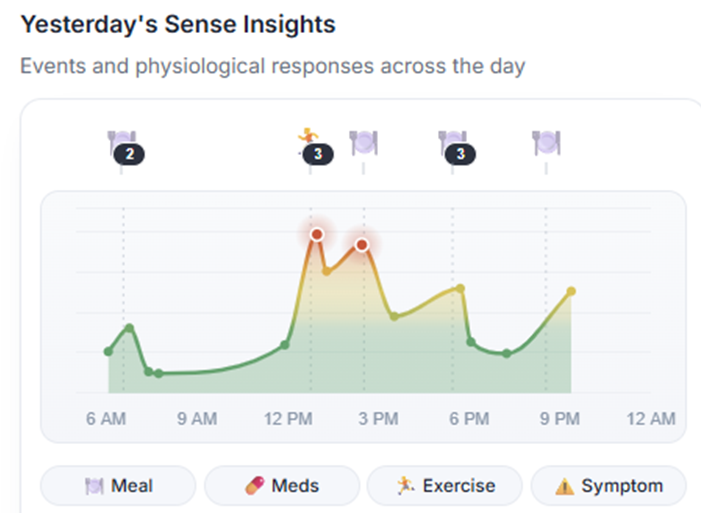
This is where Quellios Snap & Sense becomes useful. Food and exercise do not act in isolation: a workout, a meal, alcohol, sleep, stress, and symptoms can all interact across the day. Quellios helps users track meals and exercise alongside bio-optical response patterns, making it possible to see whether the body shows a short-lived adaptive response, a prolonged response, or a rising baseline. Early Quellios data suggest we can track both the immediate post-exercise response and longer-term baseline changes.
The type of exercise matters. Some people may do best with walking or swimming; others may respond better to strength training, yoga, or cycling. Quellios can help users identify which approaches produce the best recovery curve, lowest baseline, and least symptom discomfort — so diet and exercise can be used together to reduce chronic inflammatory burden and improve day-to-day comfort.
References
- Magni, O., Arnaoutis, G. & Panagiotakos, D. The impact of exercise on chronic systemic inflammation: a systematic review and meta–meta-analysis. Sport Sci Health 21, 1405–1417 (2025).
- Petersen AM, Pedersen BK. The anti-inflammatory effect of exercise. J Appl Physiol (1985). 2005 Apr;98(4):1154-62.
- Gleeson, M., Bishop, N., Stensel, D. et al. The anti-inflammatory effects of exercise: mechanisms and implications for the prevention and treatment of disease. Nat Rev Immunol 11, 607–615 (2011).
- Ringleb M, Fabritius F, Godde J, Puta C, Bloch W, Javelle F. Circulating Myokine Responses to Acute Endurance Exercise and Their Role in Immunoregulation: A Systematic Review and Meta-Analysis. FASEB J. 2026 Feb 28;40(4):e71536.
- Chen, C., Zhang, D., Ye, M. et al. Effects of various exercise types on inflammatory response in individuals with overweight and obesity: a systematic review and network meta-analysis of randomized controlled trials. Int J Obes 49, 214–225 (2025).
- Falkenberg, R.I., Eising, C. & Peters, M.L. Yoga and immune system functioning: a systematic review of randomized controlled trials. J Behav Med 41, 467–482 (2018).
- Costa RJS, Snipe RMJ, Kitic CM, Gibson PR. Systematic review: exercise-induced gastrointestinal syndrome-implications for health and intestinal disease. Aliment Pharmacol Ther. 2017 Aug;46(3):246-265.
- Baart AM, Mensink M, Witteman BJM. The impact of running on gastrointestinal symptoms in patients with irritable bowel syndrome. Neurogastroenterol Motil. 2024 Jan;36(1):e14707.
- Quan Z, Song W, Huang Q, Wang J. The effects of different exercise interventions on clinical outcomes of irritable bowel syndrome and their potential mechanisms: a systematic review and network meta-analysis. Front Immunol. 2026 Feb 11;17:1730624.
Join Us
Quellios is for people who want to learn how their body responds to the foods they eat, using personalized physiological signals rather than assumptions or generic nutrition advice. Our vision is a world where people can better understand and manage inflammation and digestive wellness through individualized insight.
You can join Alpha our waitlist on the website, follow along for updates, and be among the first to try Snap & Sense.

Leave a Reply