
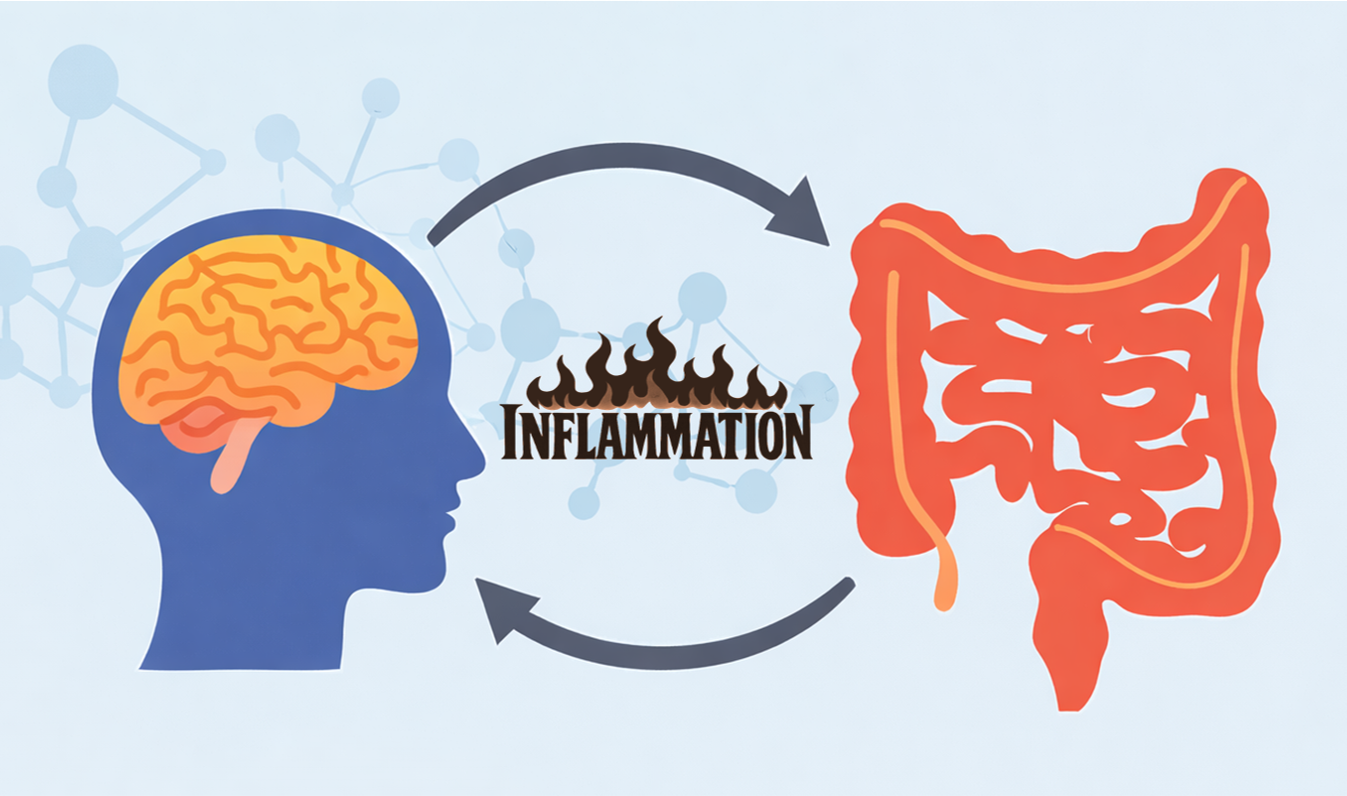

The Gut-Brain Axis, Inflammation, and Why Food Response Matters.
A recent article in Gastroenterology Advisor highlights growing research around the gut–brain axis — the two-way communication between the digestive system and the brain. Scientists are increasingly finding that the gut microbiome, diet, and inflammation all play a role in mood, anxiety, and cognitive health.
One consistent theme in this research is inflammation. Certain dietary patterns, particularly anti-inflammatory, whole-food, plant-based approaches, have been associated with improvements in metabolic health and mood symptoms. Researchers also note that inflammation may interfere with antidepressant response and contribute to broader health challenges.
What does this mean in practical terms? It suggests that how your body responds to food may matter not only for digestion, but for overall mental wellbeing.
While Quellios does not measure the microbiome or diagnose mental health conditions, we focus on measuring something closely connected: physiological signals associated with inflammatory activity after meals. Using your smartphone camera, we analyze bio-optical patterns that reflect how your body responds to food, helping connect the dots between what you eat and how you feel. Our goal is to provide personalized wellness insights that evolve as your dietary patterns and lifestyle change.
As research continues to explore the links between diet, inflammation, and brain health, tools that help people understand their personal response to food may offer a more individualized way to make informed lifestyle decisions. While the science of the gut–brain connection is still evolving, these findings reinforce something increasingly clear: dietary patterns that lower inflammatory burden are associated with benefits for both physical and mental wellbeing.
References
- Atanazova K, Knödler L-L, Reindl W, Ebert MP, Thomann AK. Role of the gut microbiome in psychological symptoms associated with inflammatory bowel diseases. Semin Immunopathol. 2025; 47(1):12. doi:1007/s00281-025-01036-x
- Clapp M, Aurora N, Herrera L, Bhatia M, Wilen E, Wakefield S. Gut microbiota’s effect on mental health: the gut-brain axis. Clin Pract. 2017; 7(4):987. doi:10.4081/cp.2017.987
- Selvaraj R, Selvamani TY, Zahra A, et al. Association between dietary habits and depression: a systematic review. 2022; 14(12):e32359. doi: 10.7759/cureus.32359
- Liu L, Wang H, Chen X, Zhang Y, Zhang H, Xie P. Gut microbiota and its metabolites in depression: from pathogenesis to treatment. EBioMedicine. 2023; 90:104527. doi:1016/j.ebiom.2023.104527
- Sun W, Lu EY, Wang C, Tsang HWH. Neurobiological mechanisms for the antidepressant effects of mind-body and physical exercises: a systematic review. Ment Health Phys Act. 2023; 25:100538. doi:10.1016/j.mhpa.2023.100538
- Rest OVD, Berendsen AAM, Haveman-Nies A, Groot LCPGMD. Dietary patterns, cognitive decline, and dementia: a systematic review. Adv Nutr. 2015; 6(2):154-168. doi:10.3945/an.114.007617
- Kahleova H, Maracine C, Znayenko-Miller T, et al. Can a vegan diet help people with type 1 diabetes save on insulin? A secondary analysis of a 12-week randomized clinical trial. BMC Nutr. 2025; 11(1):188. doi:1186/s40795-025-01175-2
- Agarwal U, Mishra S, Barnard ND, et al. A multicenter randomized controlled trial of a nutrition intervention program in a multiethnic adult population in the corporate setting reduces depression and anxiety and improves quality of life: the GEICO study. Am J Health Promot. 2015; 29(4):245-54. doi:4278/ajhp.130218-QUAN-72
- Chang SC, Goh KK, Lu ML. Metabolic disturbances associated with antipsychotic drug treatment in patients with schizophrenia: state-of-the-art and future perspectives. World J Psychiatry. 2021; 11(10):696-710. doi:10.5498/wjp.v11.i10.696
- Haroon E, Daguanno AW, Woolwine BJ, et al. Antidepressant treatment resistance is associated with increased inflammatory markers in patients with major depressive disorder. Psychoneuroendocrinology. 2018; 95:43-49. doi:1016/j.psyneuen.2018.05.026
- Ornish D, Madison C, Kivipelto M, e al. Effects of intensive lifestyle changes on the progression of mild cognitive impairment or early dementia due to Alzheimer’s disease: a randomized, controlled clinical trial. Alzheimers Res Ther. 2024;16(1)122. doi:1186/s13195-024-01482-z
Join Us
Quellios is for people who want to learn how their body responds to the foods they eat, using personalized physiological signals rather than assumptions or generic nutrition advice. Our vision is a world where people can better understand and manage inflammation and digestive wellness through individualized insight.
You can join Alpha our waitlist on the website, follow along for updates, and be among the first to try Snap & Sense.

Leave a Reply